Polyformaldehyde (POM) thermoplastic crystalline polymer. Known as "Super Steel" or "Sai Steel", The English abbreviation is POM. Generally, polymers obtained by formaldehyde polymerization have a low degree of polymerization and are easily thermally depolymerized. It can be used as a raw material for organic chemicals and synthetic resins, and as a fumigant for drugs.
1.General property
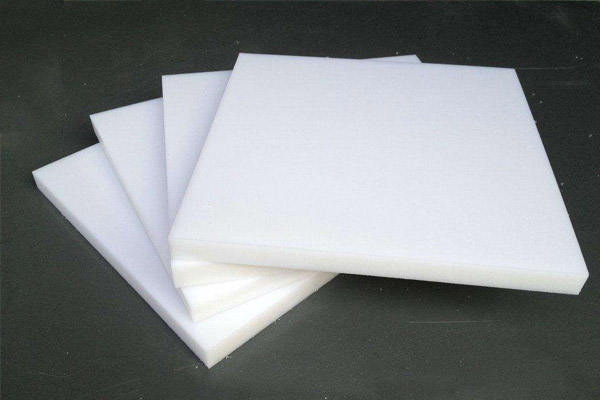
POM is a hard, dense material with a smooth surface and gloss, light yellow or white, thin-walled partly translucent. Combustion characteristics are easy to burn, and continue to burn after leaving the ignition source. The flame is yellow at the upper end and blue at the lower end. Melting dripping occurs and has a strong pungent formaldehyde smell and fishy smell. POM is white powder, usually opaque, good coloring, specific gravity 1.41-1.43 g/cm3, molding shrinkage 1.2-3.0%, molding temperature 170-200℃, drying conditions 80-90℃ for 2 hours. POM's long-term heat resistance is not high, but it can reach 160°C in the short term. Among them, the short-term heat resistance of the homopolymerized POM is higher than the copolymerized POM by more than 10°C, but the long-term heat-resistant copolymerized POM is about 10°C higher than the homopolymerized POM. It can be used for a long time in the temperature range of -40 ℃ ~ 100 ℃. POM is very easy to decompose, the decomposition temperature is 280 ℃, there are irritating and corrosive gases in the decomposition process. Therefore, the mold steel should be made of corrosion-resistant materials.
2. Mechanical property
POM has high strength and rigidity, good elasticity and good wear resistance. It has an excellent mechanical property, specific strength up to 50.5MPa, specific stiffness up to 2650MPa, very close to metal. The mechanical properties of POM change little with temperature, and the change of copolymerized POM is slightly larger than that of homopolymerized POM. POM has high impact strength, but conventional impact is not as good as ABS and PC. POM is sensitive to notches and can reduce impact strength by as much as 90%. The fatigue strength of POM is outstanding. After 10 alternating loads, the fatigue strength can reach 35MPa, while PA and PC are only 28MPa. The creep characteristic of POM is similar to that of PA. The creep characteristic at 20℃, 21MPa and 3000h is only 2.3%, and the temperature effect is very small. The friction coefficient of POM is small, the wear resistance is good (POM> PA66> PA6> ABS> HPVC> PS> PC), the limit PV value is very large, and the self-lubricity is good. When subjected to high loads, POM products are prone to screaming.
3. Electrical property
POM has good electrical insulation and is hardly affected by temperature and humidity; the dielectric constant and dielectric loss are
Very wide temperature, small changes in humidity and frequency range; excellent arc resistance, and can be maintained at high temperatures. The dielectric strength of POM is related to the thickness. When the thickness is 0.127mm, it is 82.7kV/mm, and when the thickness is 1.88mm, it is 23.6kV/mm.
4.Environmental property
POM cannot resist strong acids and oxidants, and has certain stability to enoic acids and weak acids. POM has good solvent resistance, can withstand hydrocarbons, alcohols, aldehydes, ethers, gasoline, lubricants and weak bases, and can maintain considerable chemical stability at high temperatures. Low water absorption and good dimensional stability. POM has poor weather resistance. Under the action of ultraviolet rays for a long time, the mechanical properties are reduced, and the surface is pulverized and cracked.
[Advantages] 1. High mechanical strength and good rigidity; 2. High fatigue strength; 3. Environmental resistance, good resistance to organic solvents
Resistance; 4. Strong ability to resist repeated impact; 5. Wide operating temperature range (-40℃~120℃); 6. Good electrical performance; 7. Good recovery; 8. Self-lubricating, good wear resistance; 9. Excellent dimensional stability.
[Disadvantages] by strong acid corrosion, poor weather resistance, poor adhesion, close thermal decomposition and softening temperature, a
评论
发表评论